In conversation with JIANG HONGLIN

Boundless visions
Back to storiesof
Jiang Honglin
We meet Jiang Honglin, the first artist to bring the ancient art of paper cutting to Italy, for the "Annual Metaverse Art@VENICE" exhibition in Venice: her work and the craftsmanship of Marcolin embody shared values and traditions
An Ancient Tradition
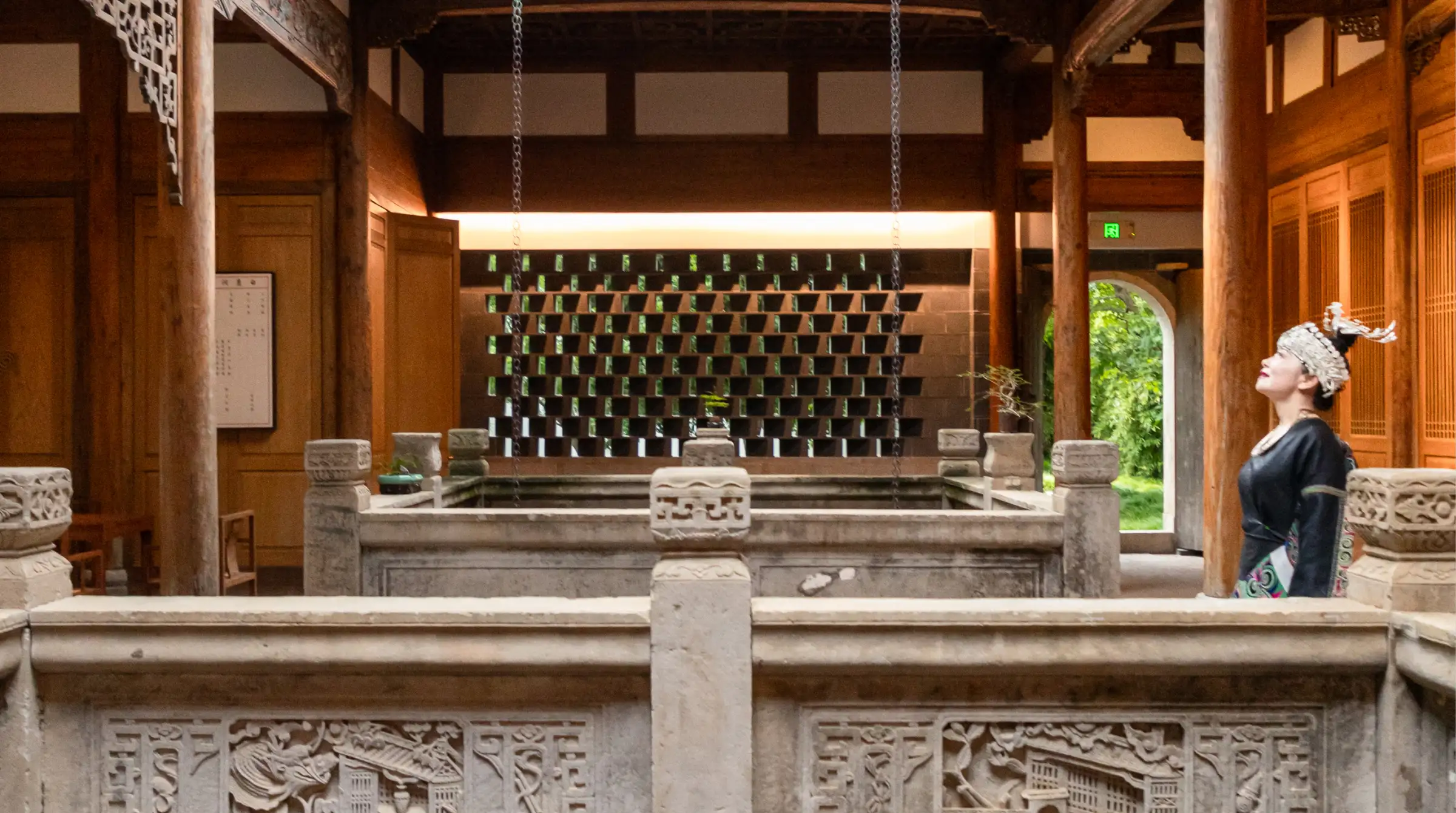
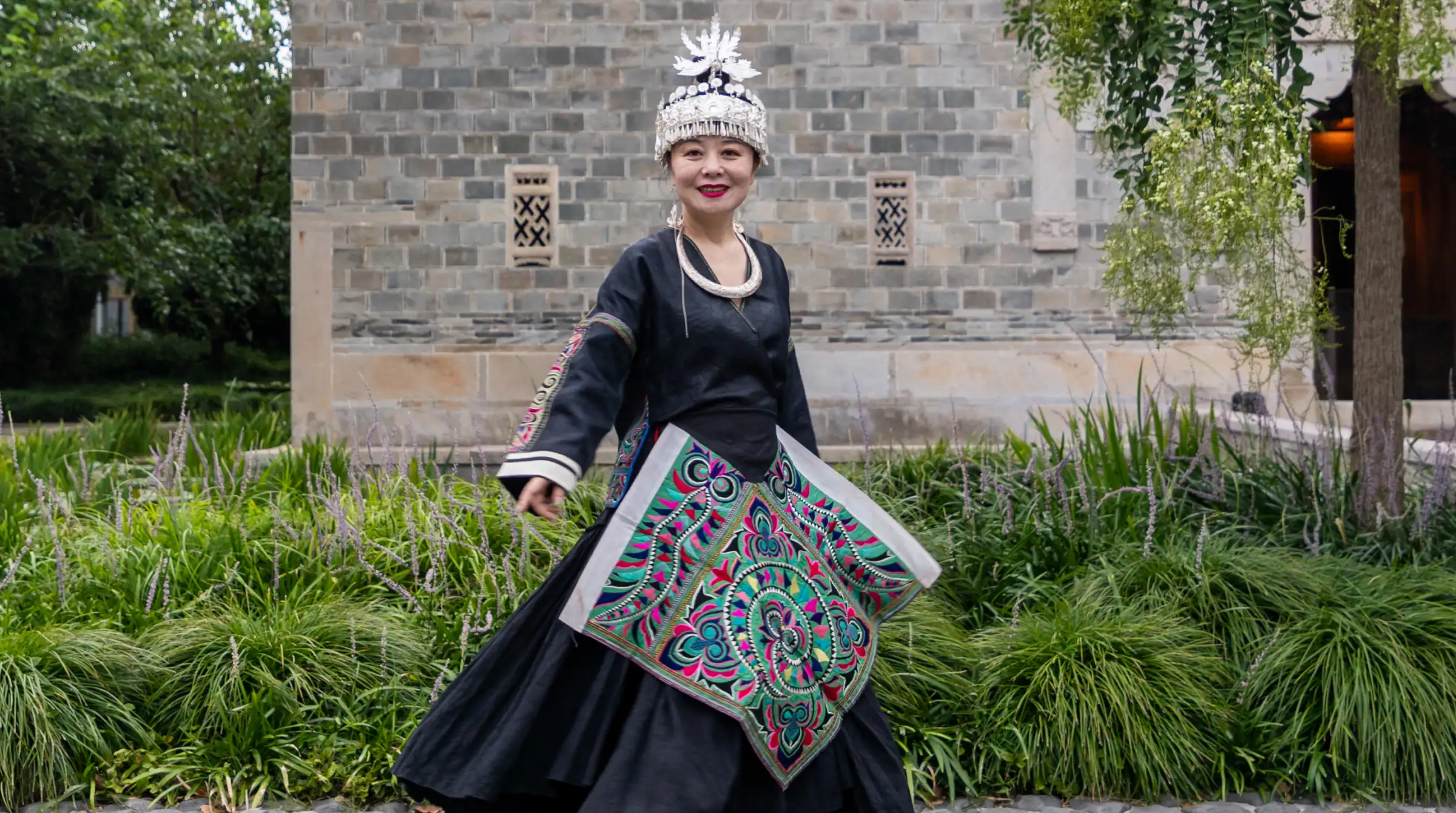
Born in Guizhou, Jiang Honglin is the world’s most renowned artist in the ancient art of paper cutting, recognized as intangible cultural heritage in China and a cornerstone of Miao artistic identity. Although the technique is practiced throughout China, the Miao variations stand out for their symbolic richness and deep connection with ethnic traditions.
Jiang Honglin’s work draws inspiration from a vast collection of traditional motifs, merging them with a modern aesthetic in her tireless pursuit of manual perfection. Thus, transcending the boundaries of time and geography, Jiang Honglin’s creativity meets Marcolin’s craftsmanship—both born of the same devotion to detail and artisanal precision.

The Gestures
Watching Jiang Honglin’s small scissors move gracefully and swiftly across the paper is like witnessing a dance performance: the artist works quickly and precisely, freehand, following patterns that have belonged to Miao tradition for millennia. Her paper cutting comes to life, transforming into richly decorated silhouettes of twin dragons, divine birds with splendid plumage, or delicate “butterfly mothers.”
In her unique ability, as critics say, to “give soul to paper,” one finds the same principles of attention to detail, symmetry, and balance between form and function that also permeate Marcolin’s creations: both celebrate craftsmanship as a form of expression and visual storytelling.
The Value Of Objects
Thanks to figures like Jiang Honglin, the intangible cultural heritage of a country can remains alive and be renewed through a contemporary language. The value of objects lies in their ability to embody abstract cultural concepts, personal traits, and social identities. Just as a paper carving transforms a sheet into a cultural narrative, so too does Marcolin’s artisanal excellence transcend the mere functionality of a pair of glasses, turning them into a distinctive and identity-defining symbol.