In conversation with JORDAN KEYS and ALESSANDRO MELIS

Boundless visions
Back to storiesof
Jordan Keys and Alessandro Melis
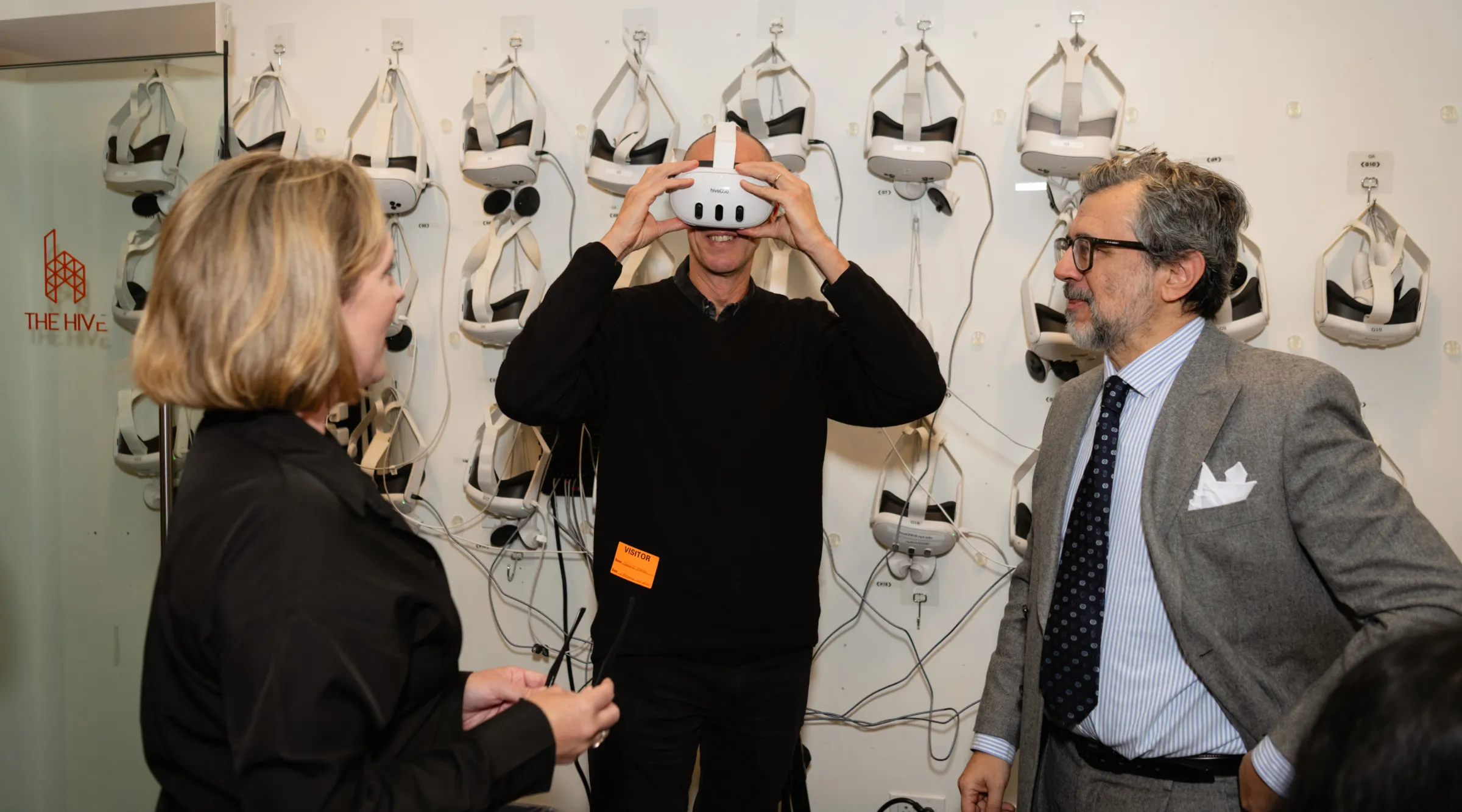
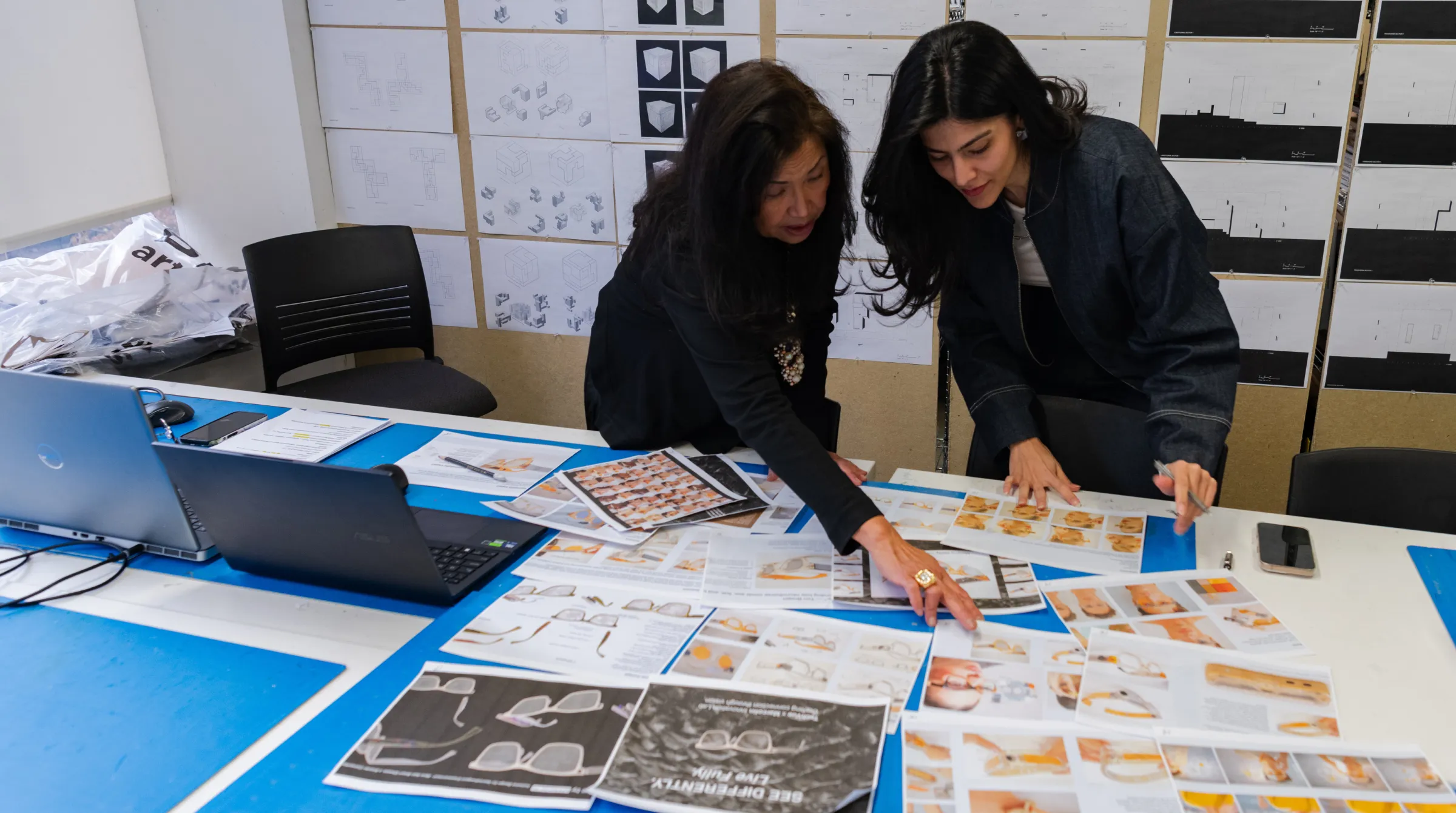
A boundary-pushing exercise in vision and a laboratory of creative, technological, and inclusive ideas. This, in essence, is Vision Reframed: a project that brought together eyewear leader Marcolin and the prestigious New York Institute of Technology, uniting professionals and students to develop innovative eyewear concepts grounded in the principles of neurodiversity, well-being, and sustainability. We discuss it with Jordan Keys, Associate Dean for Research, Outreach, and Innovation at New York Tech, and Professor Alessandro Melis.
Jordan Keys:
How did the idea for Vision Reframed come about?
«Vision Reframed grew out of a collaboration with one of my colleagues—an idea that truly spotlighted our mission at New York Tech: fostering innovative, collaborative projects. Being able to bring together our schools, the School of Architecture and Design and the College of Osteopathic Medicine, along with our industry partner Marcolin, allowed us to develop not just an abstract idea but something genuinely innovative and tangible».
Alessandro Melis:
Combining design, sustainability, well-being, and innovation requires navigating very different languages. What challenges and opportunities arise from merging these worlds?
«Bringing together design, health, and innovation is actually the very reason we organized the workshop. And this reason has become even more crucial today, in times of global crisis, because finding solutions now requires the contribution of people with different skill sets».
Jordan Keys:
Did it help you understand the potential of interdisciplinary collaboration?
«This project genuinely highlighted the value of interdisciplinary work in ways I could never have imagined. It made us reflect on how, in this technological era—with advancements like artificial intelligence—we simply cannot operate in isolation. Collaboration is essential: osteopathic medicine students working hand in hand with Architecture and Design students. Not only because it enables us to create a truly innovative product for people with diverse disabilities, but also because it let us reach technological heights that, as a physician, I could never have imagined».
Alessandro Melis:
Which ideas from the workshop best embodied the concept of ‘borderless design’?
«It’s impossible to single out just a few: all the ideas presented at the end of this journey fully embraced the complexity involved in designing a pair of glasses, and they all worked toward a universal design—not aimed at a specific target. We often tend to see technology as something distant from creativity, even as a limitation for design. But in this workshop we discovered the opposite: technology does not belong to a separate realm; it’s the tool that can bring together various dimensions of design, starting with careful attention to materials. Because diversity in creativity—and technology itself—is the driving force behind the designer of the future».
Jordan Keys:
How is the role of universities changing in promoting innovation and shaping the next generation of creatives?
«Industry and academia now depend completely on each other. At the university, we’re training the next generation of professionals—truly the most intelligent and capable generation I’ve ever worked with. But when you turn to industry, you have to ask: what does the community need? And when both sides come together, that’s when the most innovative and stimulating ideas can emerge».
Alessandro Melis:
Today the designer’s role seems to be shifting from ‘creator’ to ‘connector.’ How do you see this transformation?
«As a return to the origins of what the designer’s true creative role is. Students are often taught that the word architect means ‘master builder,’ but Aristotle originally gave it a different definition: the architect as a creator of ideas. And that is exactly what we hope to inspire in the next generation of designers».